
The Blog
It’s interesting with the marketing ‘rules’ being turned on their head, the ancient art of storytelling is very much a hot topic again. It used to be that everyone talked about the brand “Idea”, and now everybody is talking about being a brand “Storyteller.” Which is great, because everyone loves a good story.
Lately I’ve had the chance to visit with some of the world’s best marketers, and they all talked about the central themes critical to their brand’s success. Mike Dellman at Microsoft’s Entertainment Division talked about ‘creating objects of desire.” Juan Pendavis of Nescafe spent the last 2-3 years simplifying the briefing process to help create “more surprising stories”, and Reggie Fils Aime at Nintendo talked about “creating new experiences for everyone.” Two nights ago I had dinner with David Wheldon, who was my client when I worked with Coca-Cola, and he described a brand as the lead character constantly evolving a play.
If you’re going to think of a brand as a story, it’s important to think about classic storytelling structure. Are you in Act I, or Act II? (One of the great things about writing brand stories is you never have to write the hardest Act, Act III. Because hopefully for the brand, the story never comes to an end.) Then you need to think about the characters in your story, the consumer, the employees, your leadership group, and your products. How do they interact? What creates the drama? What moves the story forward?
Brands that create content like Xbox and Nintendo definitely have an advantage when creating stories, because they actually create and populate their brand stories with characters they create like Mario and Master Chief (the Halo 3 campaign that won at Cannes is classic storytelling; hero, villain, obstacles to be overcome).
When I had lunch with Reggie, it was right after he had laid out his brand story at E3, and his brand narrative was very clear. Nintendo’s story is not about new technologies, (not only because Microsoft was promoting Kinnect down the hall,) but ‘new experiences for everyone.” The premise for the brand story was set, and the rest of the speech tracked quite nicely down that path. It’s a powerful brand story and one that lays out a voice all aspects of the brand. And it doesn’t hurt that Nintendo’s list of characters populate their stories.
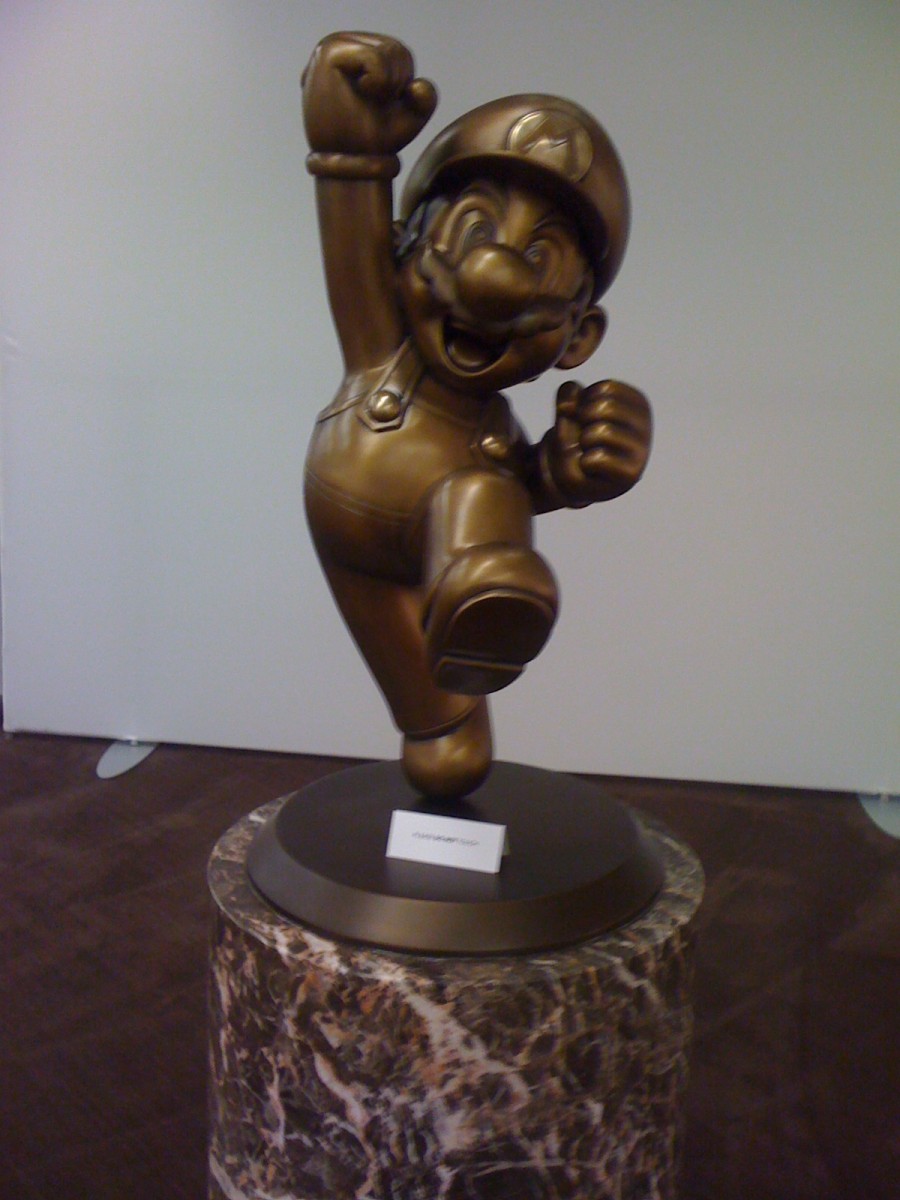
The photo at the top of the page is of a sculpture of Mario commissioned for the lobby of Nintendo’s new headquarters. Apparently, internally, it was a bit controversial, because getting the three-dimensional proportions of Mario accurate was no small task. You see, like his brand, Mario has evolved. He’s definitely well into Act II. And this sculpture brought up an interesting story from Reggie about the Mario who launched Act I. Seems that the reason that Mario has a mustache is because in the original game, their were so few pixels to create the image, that they added the mustache because often times is was the only facial feature that would show up. Mario, like any good character in any good story changes as the story progresses.


