
The Art of Business
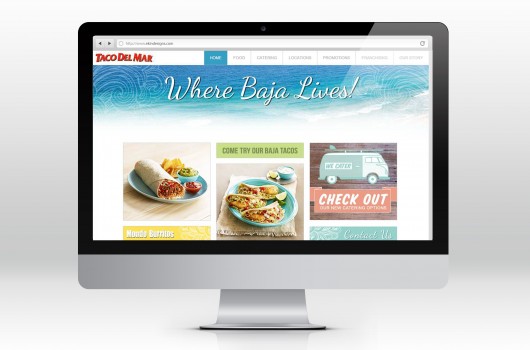


jimwalkerseattle is thrilled to be leading the new North American positioning work and brand update for Subway’s Taco Del Mar. Phase I of mobile and web just launched, and the new look and feel hit stores this week. It’s been a great example of how a talented team and inspiring partners working from some Simple Human Truths can lead to a simple, visual, and powerful expression of a brand across platforms.
The goal was to bring a contemporary look, feel, and an attitude to the brand while honoring the original values that has made the brand successful. The work that went into “Where Baja Lives” provides clear direction for everything from advertising, to the in-store experience, employees and the menu.
Thanks to everyone who’s been involved so far, especially:
John Kerr: Customer Insights/Research
Lori Peck: Art Direction
Michelle Gadeken: Design
Alan Yamamoto: Writer
Avanti Commerce: Mobile and Web
Creative Services: Subway Worldwide
Annabelle Breakey Photography
Courtney Clarke, Kontent Partners: Producer
Luke Walker: Producer

The hard part of any national launch is the tension between growth and simplicity. As the stakes get higher, the message needs to get simpler. As a small company, it’s easy to manage the ‘message.’ And often times, good leadership and internal communication will lead to a focused and motivated core team. In small companies, you’ll also hear people say, “We just get it.” But as the brand grows, it becomes more and more important to have a simple, differentiating message. A simple story that can survive on it’s own without a lot of explanation.
It’s key to realize people have a very finite ability to retain rational facts. But fortunately, we as humans seem to have an unlimited ability to remember emotional triggers. And why it’s so important you find the Simple Human Truth about your story and your brand.
I had the incredible opportunity this year to lead the national launch for Sparkling Ice. It’s a great example of the power of focusing on the Simple Human Truth and how to create a compelling story that’s about the experience from an emotional point of view.
The Simple Human Truth about Sparkling Ice?
People drink it because it tastes great, has bold flavors and zero calories. But taste is a very difficult thing to communicate without actually tasting. It’s why in the Sparkling Ice campaign, color became the emotional trigger for bold taste.
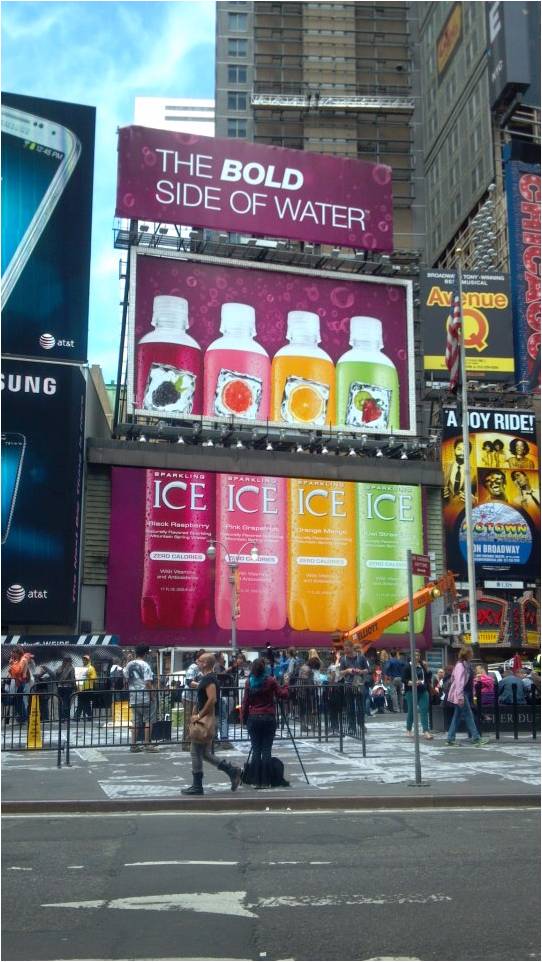
The campaign has helped fuel Sparkling Ice’s growth as the fastest growing non-alcoholic beverage in the country despite a growing roster of knock offs and competitors. Sparkling Ice recently passed Vitamin Water in sales in big box retailers.
The message was bold in it’s simplicity. Bold Flavors. Zero Calories. Perfectly possible. The campaign made use of color not only to communicate the multiple flavors, but the taste, optimism and refreshment that has made Sparkling Ice so successful. And it’s also a perfectly possible example of the power of understanding and executing the Simple Human Truth about a brand.
To learn more about one of the fastest growing brands in the country, you can go to www.sparklingice.com
.
One morning, a few friends and I showed up at a small landing strip between Seattle and Tacoma, having agreed the night before to go skydiving. Training took most of the day, because we didn’t jump with an experienced jumper, we jumped static line, which meant that once you jumped out of the plane, you were on your own.
So a lot of time was spent training to open the second chute. And the trainer definitely had a point to make.
He stood inside the old hangar and said, “Once your first chute opens, you need make sure it’s not fouled. Even a fouled chute can make you feel like all’s good. But a fouled chute is a problem. It can kill you.”
“The way to check for a fouled chute is to look up, and make sure it’s perfectly round. If it’s not perfectly round, you have a fouled chute. And if you have a fouled chute, it can kill you.”
“So what you’re going to need to do is cut that chute loose. Then open the second chute. And here is where it’s going to get weird. At 3000 feet, you are going to be tempted to think, ‘I’ll open my second chute first, just in case it’s fouled too, ’cause at least the first chute has slowed me down.'”
“Do not do that. If you open the second chute into the first chute you’re going to make things worse. You will have two fouled shoots. And it will kill you.”
“You need to trust the fact that the second chute will work.”
So at 3000 feet, on a spectacular morning, the hardest part wasn’t jumping out of the airplane, the hardest part was looking up to see if I had a fouled shoot. I really didn’t want to look up. I didn’t want to see if I had a problem. I can’t tell you how bad I wanted to see a perfectly round chute. (It was).
But the lesson stuck long after I landed safely near the “X” in the meadow
Be willing to cut loose a fouled chute.
Too many times, in the creative process, in business and organizations, people hang on to a fouled idea, or a plan, or business model. And even when they try to change, they open the ‘second chute’ right into the first one. Too much time is wasted trying to ‘fix’ old, unsuccessful ideas. More time should be spent throwing the old idea away, and starting with a fresh piece of paper. Redrawing the organization rather than adding new ‘boxes’ to the old org chart. Spending a couple days really defining what business you’re really in rather than adding a few pages to the powerpoint.
Cut loose the first chute, and trust the second one. Who knows? You may even find the little bit of free fall in between quite exciting.
Just wrapped up a two month project commuting back and forth to London. And since I believe that all work and no play makes for a dull blog, I thought I’d pass on a couple recommendations. I have to give credit to my neighbor Greg SJ for most of the tips. For a city that used to have the reputation of bad or boring food, times have definitely changed.
For Indian food, go to Tammerind in Mayfair. Greg told me it changed his wife’s mind about Indian food, it definitely changed mine.
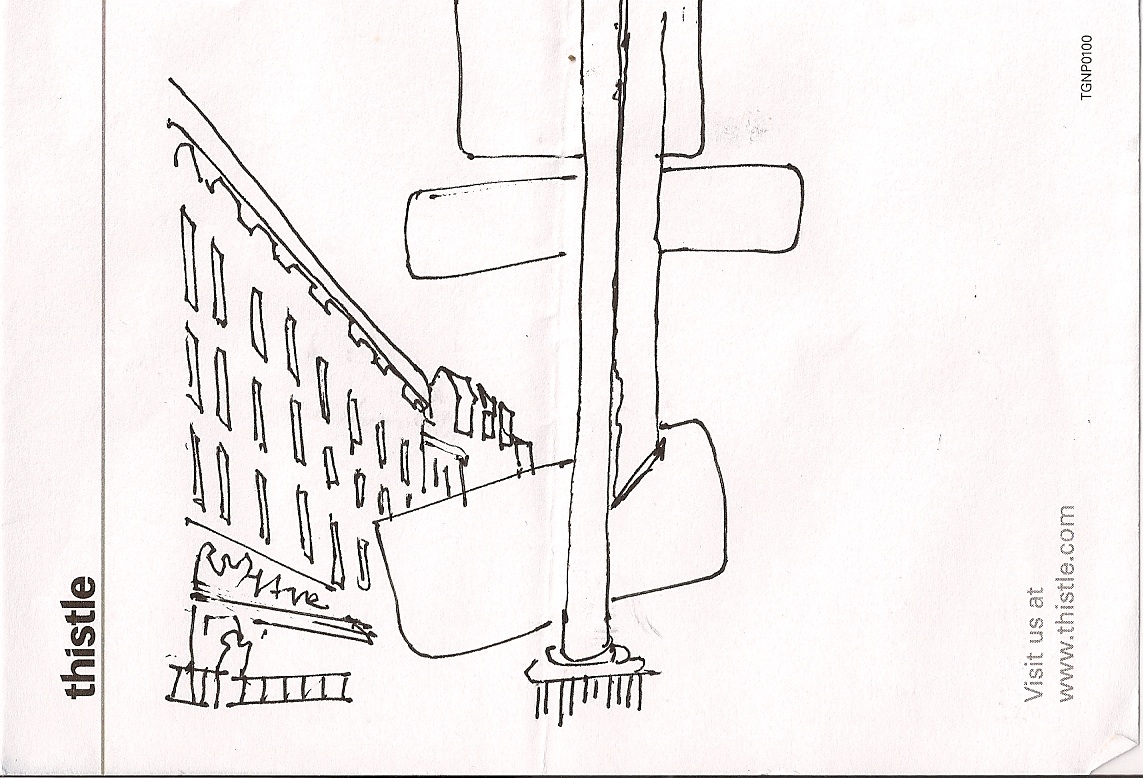
In Bloomsbury, there’s a fantastic Vietnamese restaurant called Bam-Bou. Probably the favorite on my list. If you’re in shape, make your way up the stairs for a drink. The sketch is my view from the table looking up Charlotte Street.
Another great find that Greg recommended was Daphnes. Went there with a client. Had a great time. Delicious food, beautiful people.
On my last night in London, went to Tom Aikens (apparently one of London’s celebrity chefs) and had the best lamb I’ve ever had in life.
Places on Greg’s list that I didn’t make it to:
Crazy Bear (Thai) and The River Cafe on Thames Wharf (Italian and French).
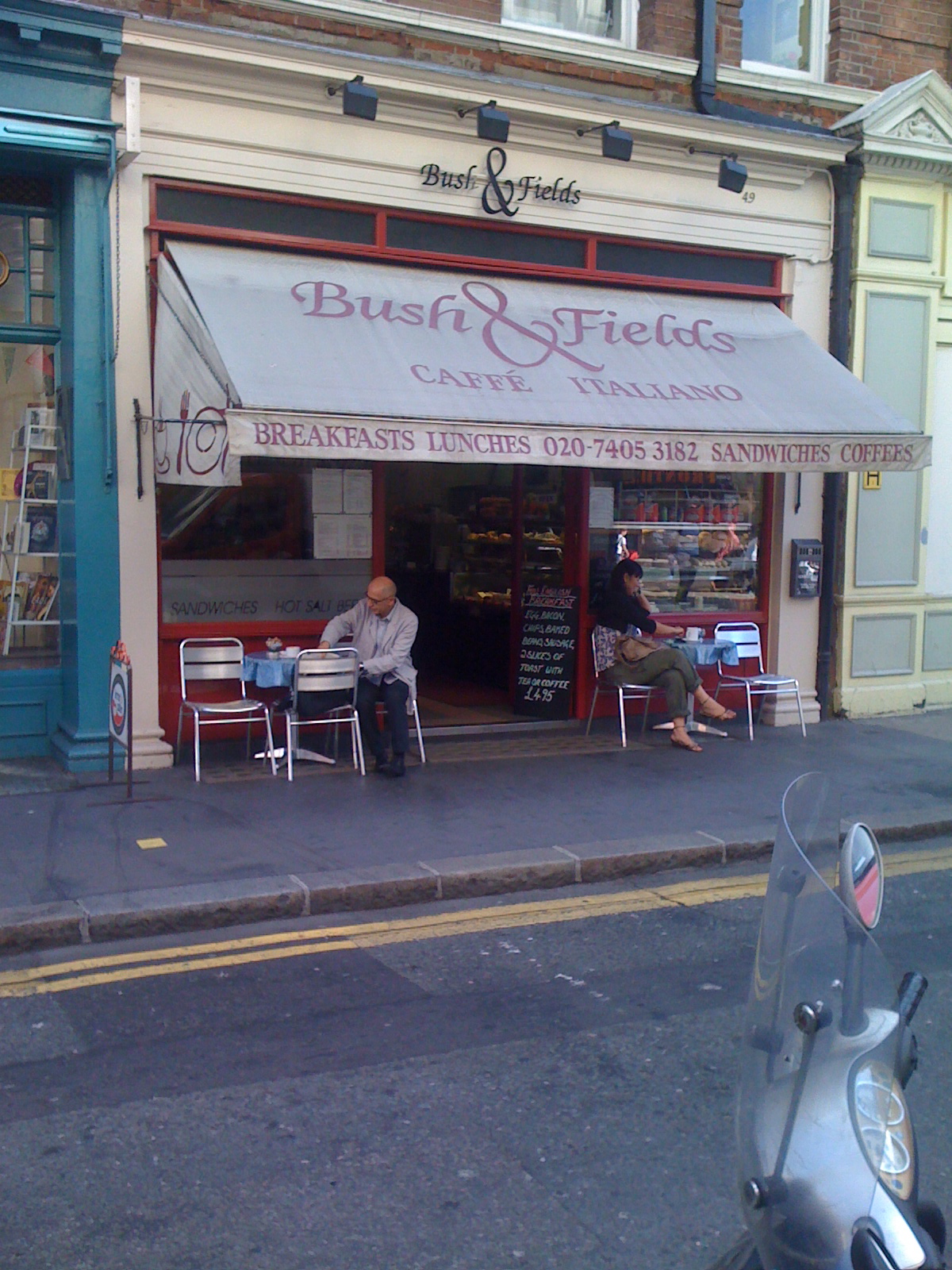
And a special shout out to my favorite (favourite) breakfast place on Museum Street, just around the corner from the hotel, Bush and Fields Caffe Italiano-(ok, the names a bit of an oxymoron). The best espresso in the city and a great place to start the day.
Enjoy.
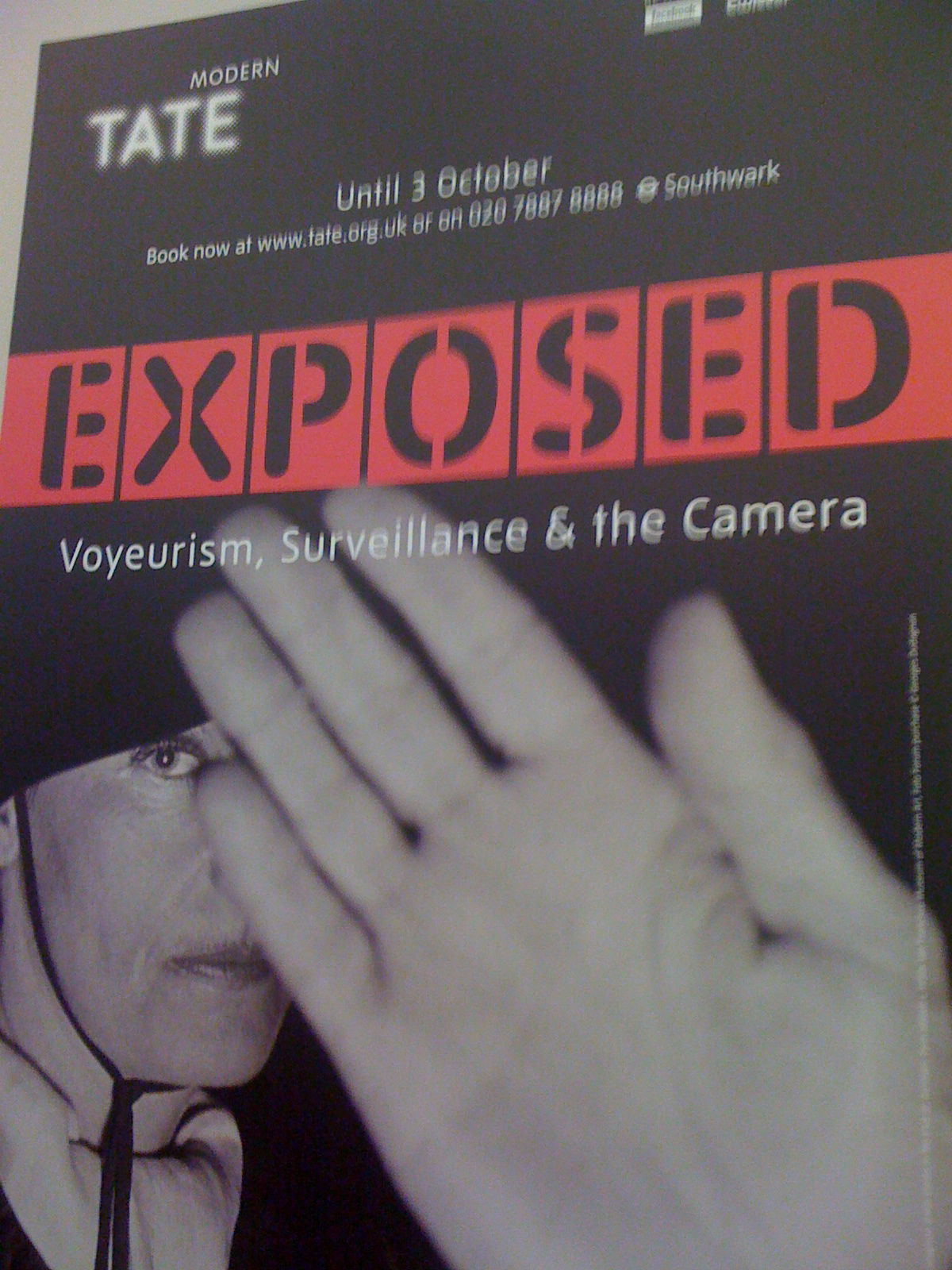
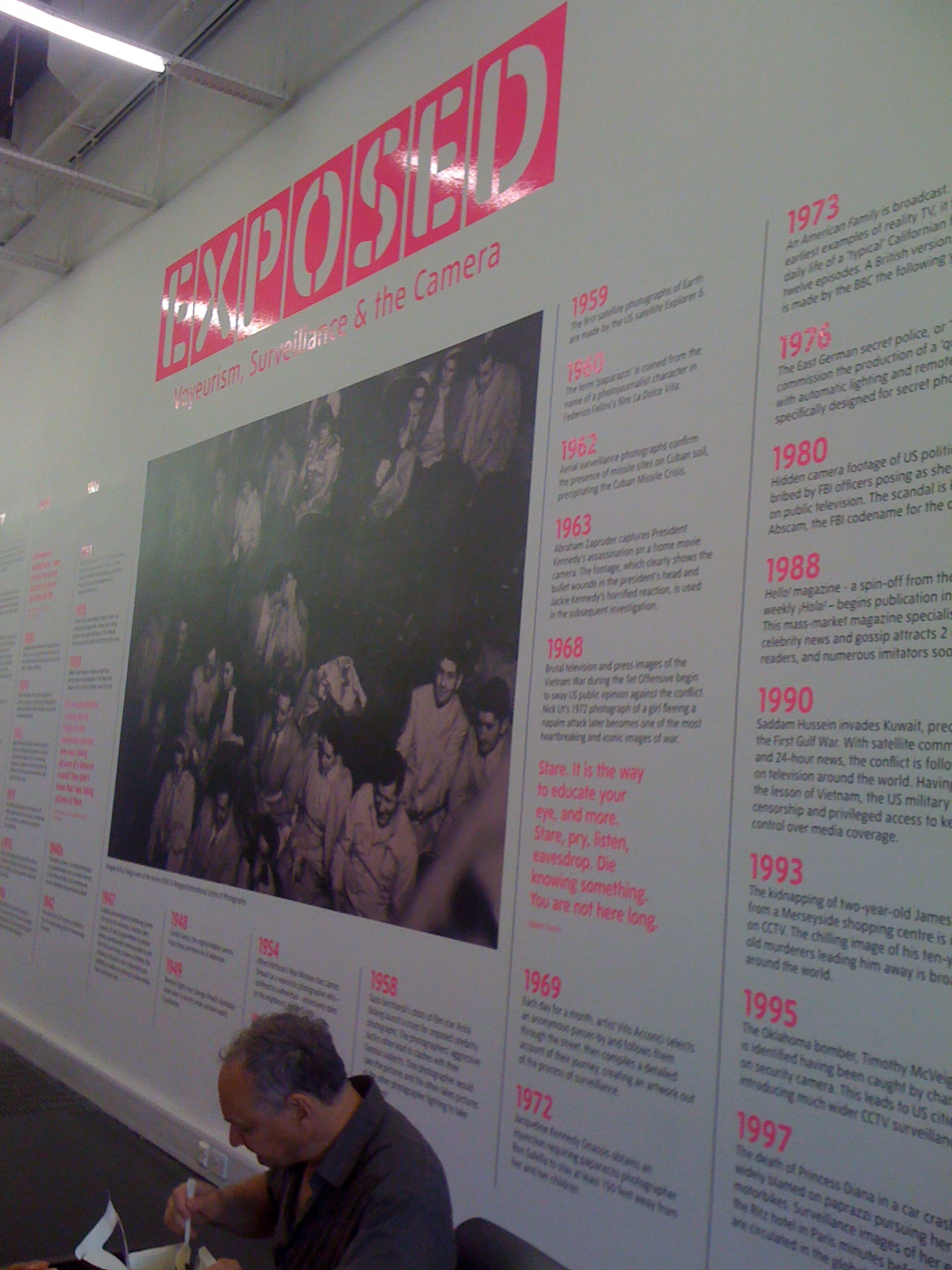
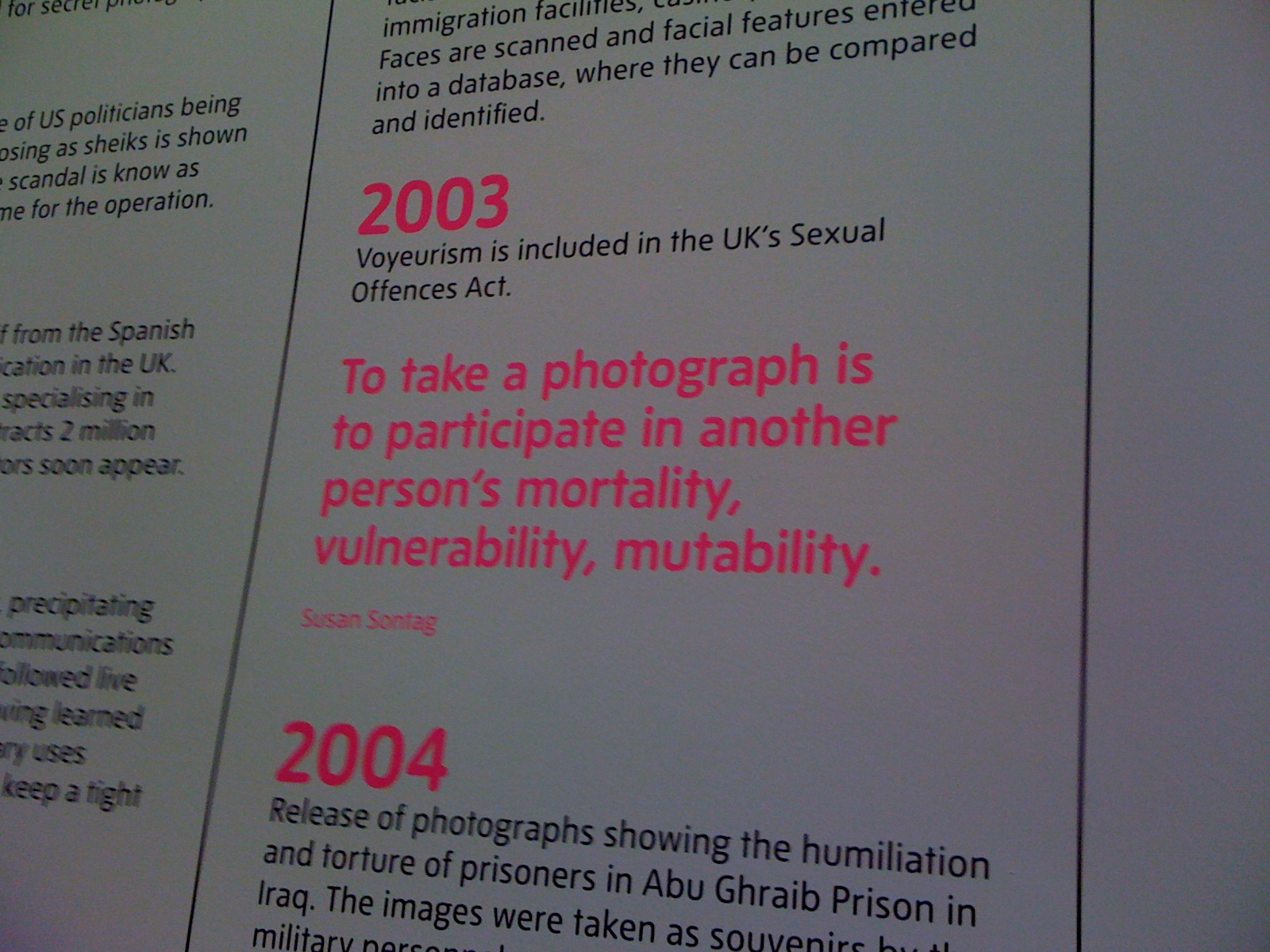
If you’re lucky enough to be in London over the next few months you should check out the exhibit “Exposed.” I stumbled across it Sunday morning at the Tate Modern on my way to the expresso stand that overlooks the Thames (one of my favorite ‘escapes’ in London).
The subtitle of the show is, “Voyeurism, Surveillance and the Camera.” I’ve written about voyeurism before as being one of the critical elements of a good story. The show made me think about the role of voyeurism in a modern day story. Traditional storytelling was a one way proposition. Storyteller to listener. Writer to reader. Filmmaker to viewer. When talk about storytelling in marketing, we throw around “consumer generated content”, “social media” and ‘engagement strategies” as exciting new trends, but unfortunately, most people are throwing traditional one way messages into two way channels. It’s like being on the phone and expecting the consumer to never turn the mute button off. The viewer wants to be a part of the story. Brand to consumer and back to brand. And that can get a little uncomfortable for most brands.
“Exposed” examines the history of of capturing voyeuristic images, and the changes it’s had on the world. From satellite imaging to paparazzi, Google and you-tube, not only does voyeurism change how we view things, but it also changes the way people (and the world) behaves. And as strange as it seems to see what Blackberry is going through in Saudi Arabia, you can probably trace it’s precedent back to The Patriot Act. (Ok, I’ll stop, let’s not talk politics). And when people change, how you market to them needs to change. It’s an interesting challenge for marketers and brands. Think about it, when you live in a world where you can watch everything, everything can watch you. Are you ready for that?
It’s interesting with the marketing ‘rules’ being turned on their head, the ancient art of storytelling is very much a hot topic again. It used to be that everyone talked about the brand “Idea”, and now everybody is talking about being a brand “Storyteller.” Which is great, because everyone loves a good story.
Lately I’ve had the chance to visit with some of the world’s best marketers, and they all talked about the central themes critical to their brand’s success. Mike Dellman at Microsoft’s Entertainment Division talked about ‘creating objects of desire.” Juan Pendavis of Nescafe spent the last 2-3 years simplifying the briefing process to help create “more surprising stories”, and Reggie Fils Aime at Nintendo talked about “creating new experiences for everyone.” Two nights ago I had dinner with David Wheldon, who was my client when I worked with Coca-Cola, and he described a brand as the lead character constantly evolving a play.
If you’re going to think of a brand as a story, it’s important to think about classic storytelling structure. Are you in Act I, or Act II? (One of the great things about writing brand stories is you never have to write the hardest Act, Act III. Because hopefully for the brand, the story never comes to an end.) Then you need to think about the characters in your story, the consumer, the employees, your leadership group, and your products. How do they interact? What creates the drama? What moves the story forward?
Brands that create content like Xbox and Nintendo definitely have an advantage when creating stories, because they actually create and populate their brand stories with characters they create like Mario and Master Chief (the Halo 3 campaign that won at Cannes is classic storytelling; hero, villain, obstacles to be overcome).
When I had lunch with Reggie, it was right after he had laid out his brand story at E3, and his brand narrative was very clear. Nintendo’s story is not about new technologies, (not only because Microsoft was promoting Kinnect down the hall,) but ‘new experiences for everyone.” The premise for the brand story was set, and the rest of the speech tracked quite nicely down that path. It’s a powerful brand story and one that lays out a voice all aspects of the brand. And it doesn’t hurt that Nintendo’s list of characters populate their stories.
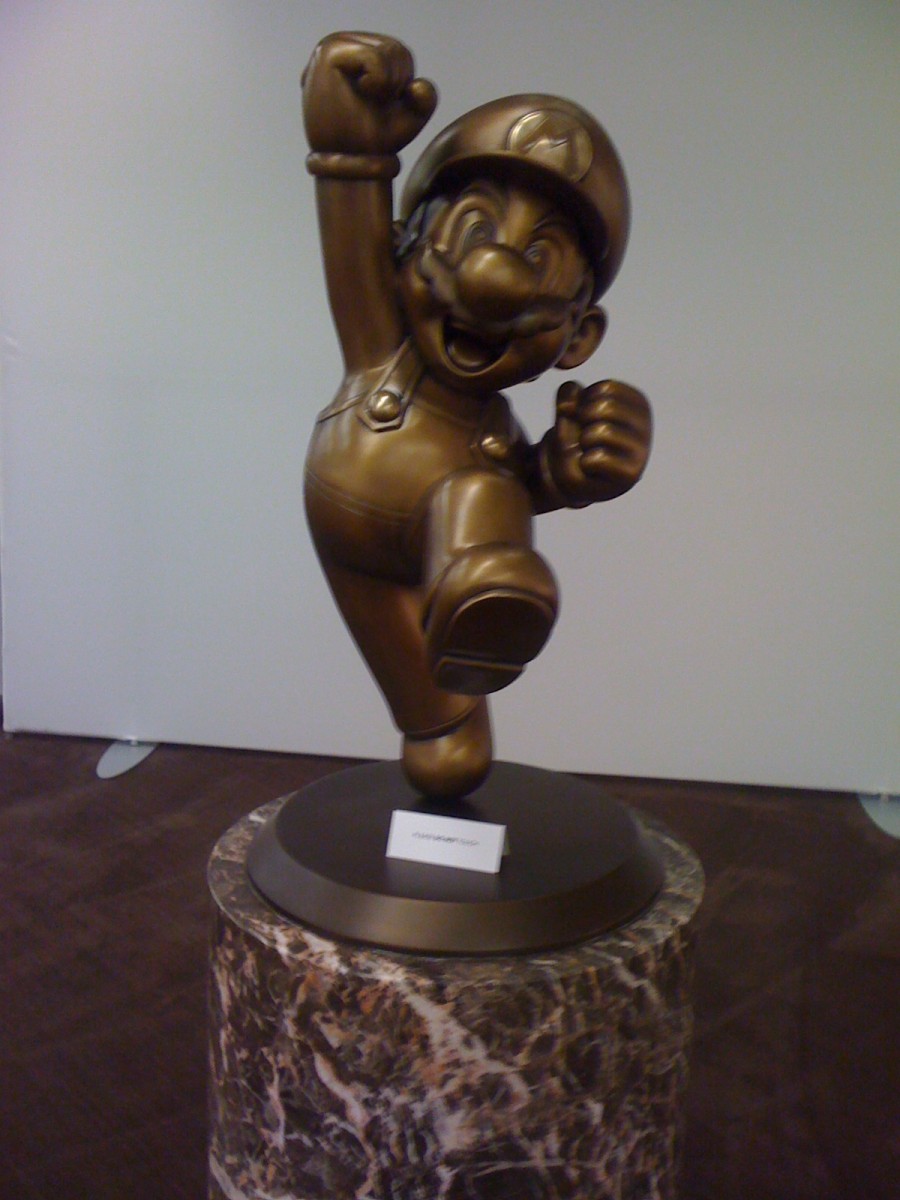
The photo at the top of the page is of a sculpture of Mario commissioned for the lobby of Nintendo’s new headquarters. Apparently, internally, it was a bit controversial, because getting the three-dimensional proportions of Mario accurate was no small task. You see, like his brand, Mario has evolved. He’s definitely well into Act II. And this sculpture brought up an interesting story from Reggie about the Mario who launched Act I. Seems that the reason that Mario has a mustache is because in the original game, their were so few pixels to create the image, that they added the mustache because often times is was the only facial feature that would show up. Mario, like any good character in any good story changes as the story progresses.
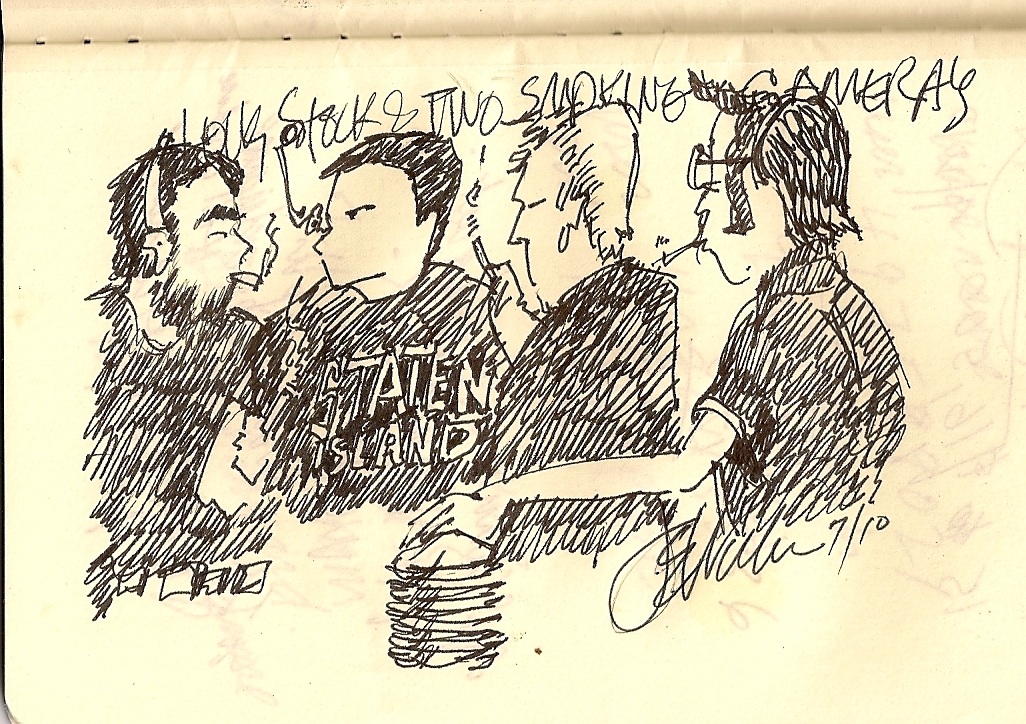
Been spending a little time in London lately. What an eclectic city. This sketch is the view from the Bertorelli’s Restaurant in Covent Gardens. Great food. Interesting alley. These guys looked like it was dress up night for a Guy Ritchie retrospective. Had an excellent haircut from a beautiful young lady from Mongolia (she hated the movie Mongol–quite passionately hated it, apparently not historically accurate). She has a brother in South Korea, a sister in Chicago and another sister in London. Her parents still live in Ulan Bator, the capital city (which means Red Hero-I did not know that) and her dad hates to travel. Left me wondering where his kids got the travel bug. Interesting the difference in generations. Most of our parents could have cared less about traveling abroad. (Another oft repeated thing in London when they find out you’re an American, “Did you know only 5% of Americans have a passport?”) I have no idea whether it’s true or not, but they all say the same thing. 5%. Travel internationally was a big deal when I was growing up. Now it just seems so common. It seems like every nationality in the world is represented on every block in this city of seven and a half million. But the differences in cultures seems to be changing. Piccadilly is like Times Square (or is Times Square is like Piccadilly). The young hair stylist was dressed like young hair stylists in Seattle. “Pints” with Deanna Oppenheimer in St. John’s Wood (if you order the lager it’s actually almost cold.) Tapas in Notting Hill with another friend from Seattle. (It’s official, no matter what country I’m in, I don’t like fried pork belly). Parks are amazing. One of my favorites, Russell Square, I had the pleasure of walking through every morning after breakfast on Museum Street in Bloomsbury. Indifferent service everywhere, except the night the three of us ordered a second bottle of Brunello. Earned us a free Lemoncello. The British tabloids seem to be more fascinated with the “Barefoot Bandit” than we are, and they don’t really quite understand why we’re so “keen” on blaming that whole “gulf mess” on poor old BP. Oh, and if it helps, 25 degrees Celsius is about 75 degrees. But you probably already knew that.
 |
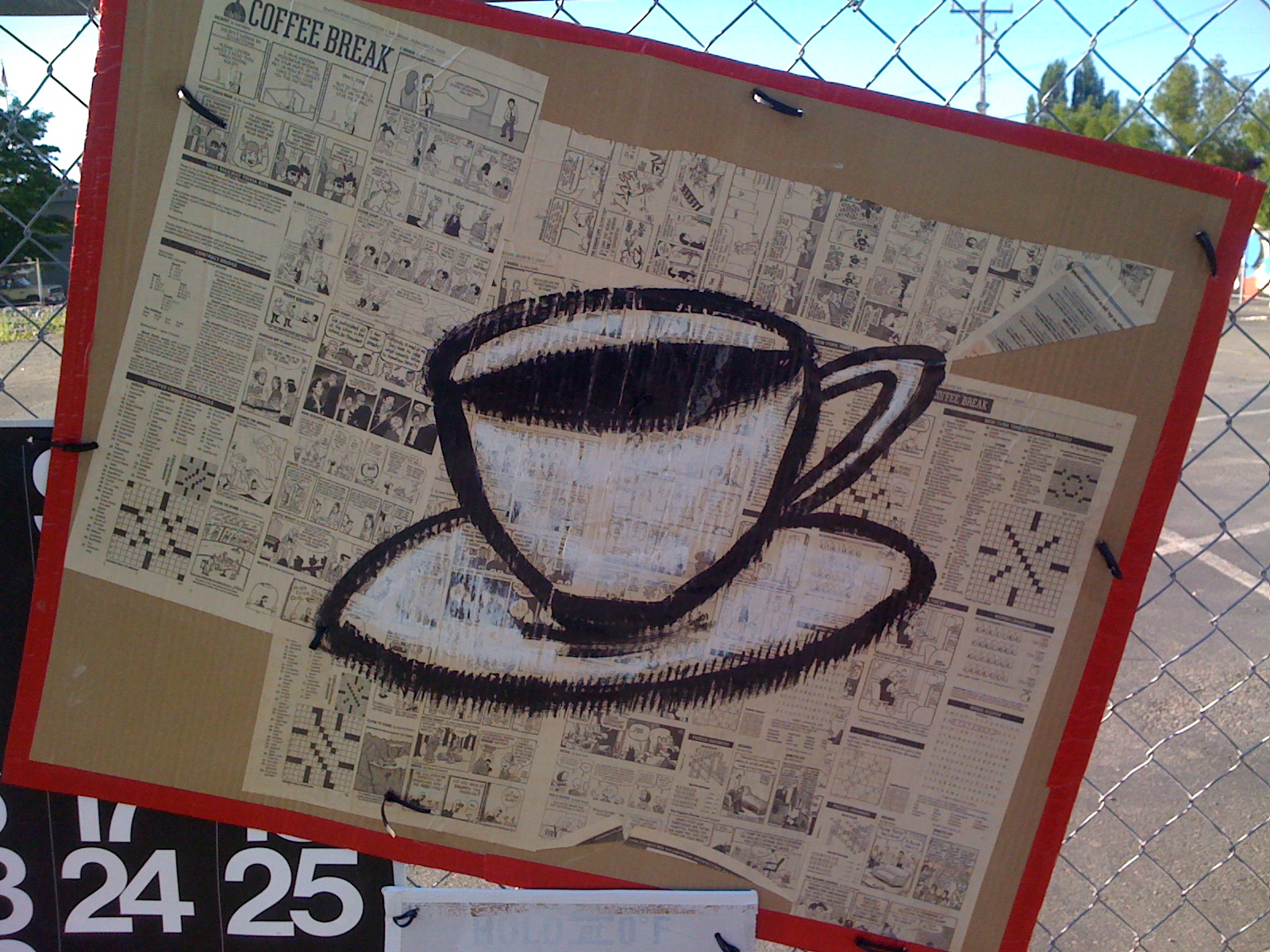
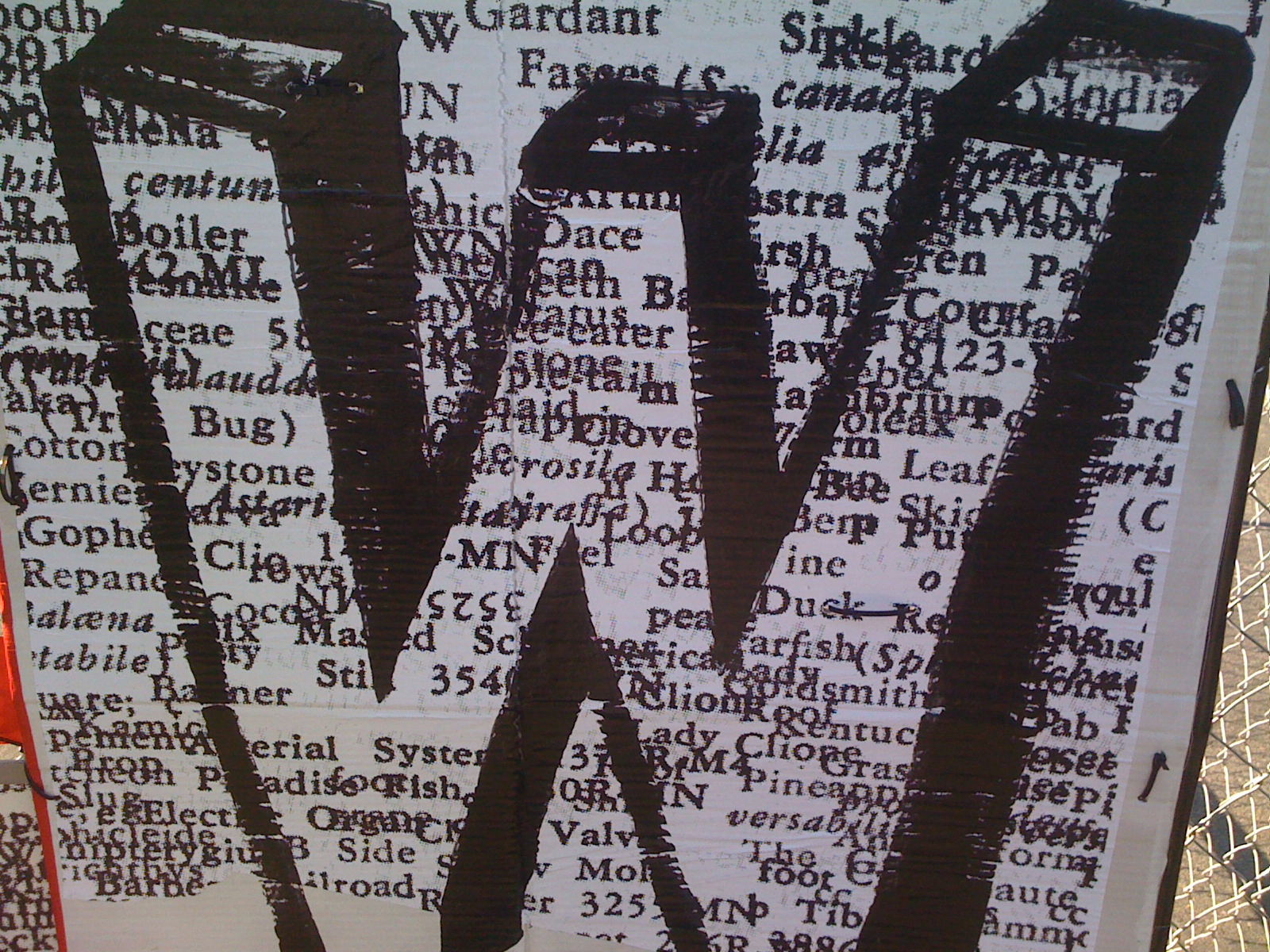
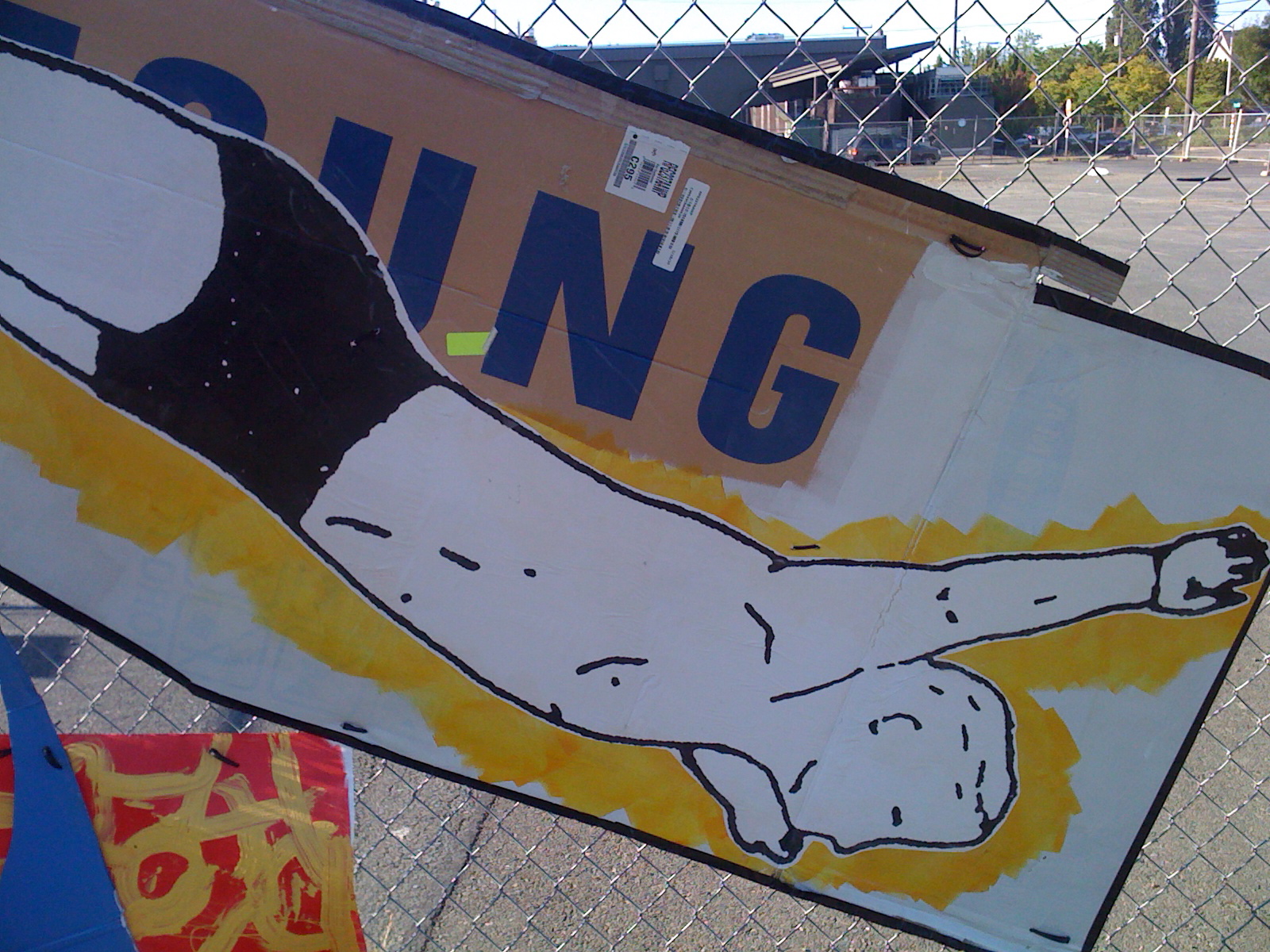
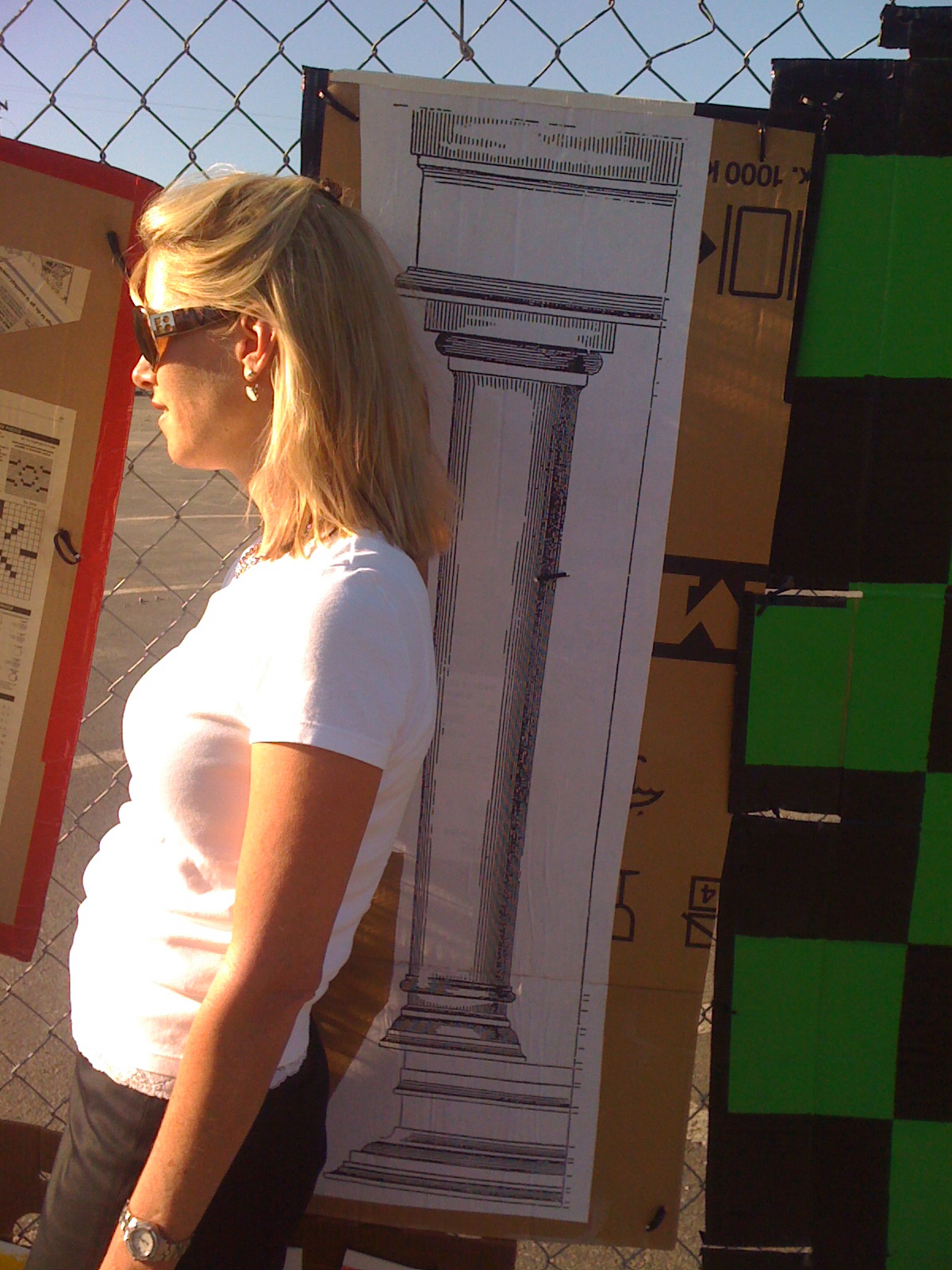
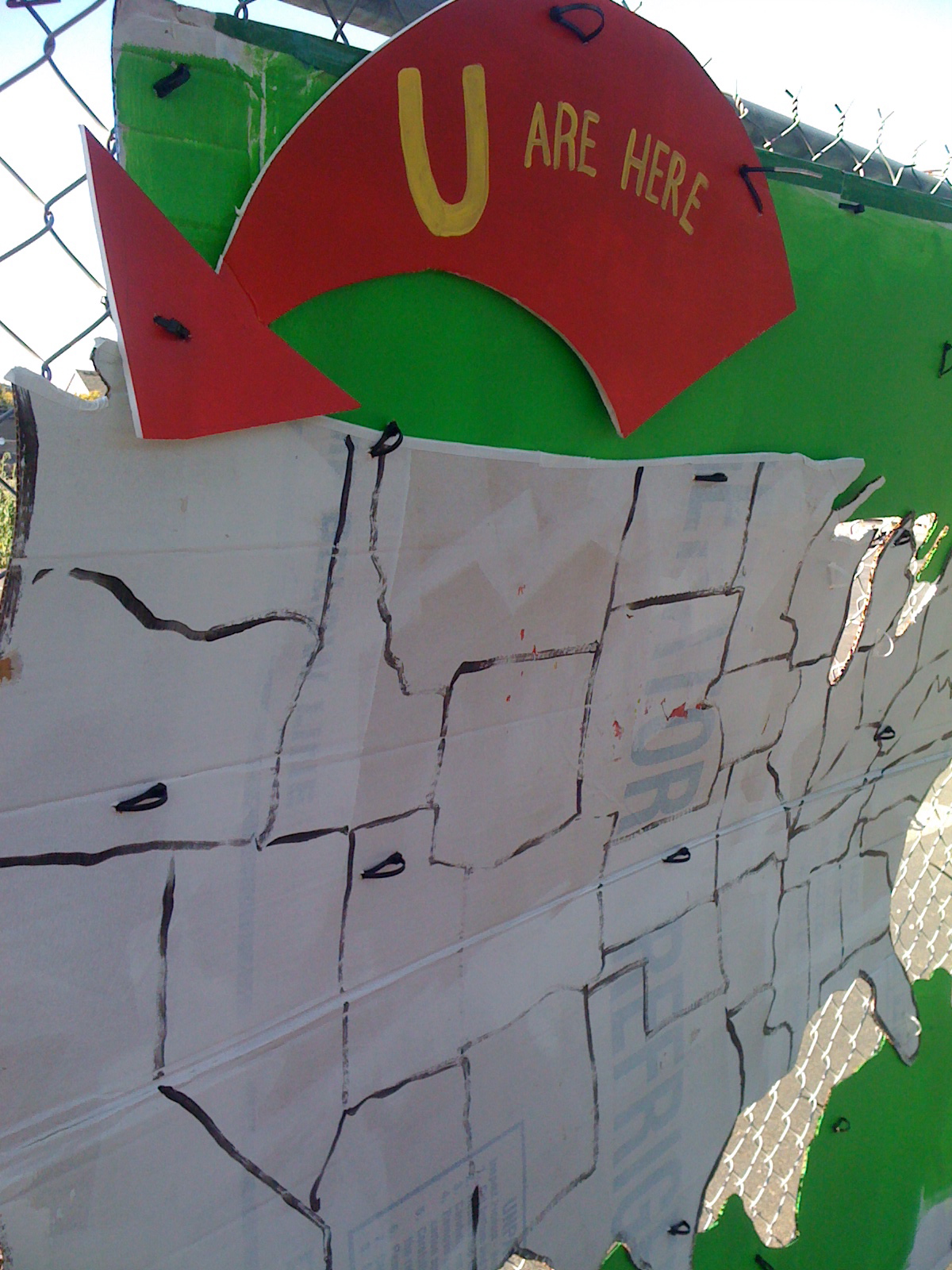
Usually when the word “art” comes up it conjures up some seriously pretentious, or staid images. Greek columns (ok there’s one in here), stuffy museums, black tie events. Below are a couple installations I’ve really enjoyed over the last couple weeks. They were done by friends and both made me smile. One was in Ballard in Seattle, by a friend of ours, Pam Gray and her fellow artist Anne Baumgartner, using recycled materials (more info at http://onthefence2010.blogspot.com). The second is an installation of a mobile by artist John Morse (a long time friend) in the offices of a lawyer in Los Angeles. The former was really fun, the latter I find hilarious.

I read David Ogilvy’s book “Confessions of an Advertising Man” once. (Ok, I think I almost finished it.) And quite frankly, it kind of made my head hurt. It was a long time ago, but I remember there seemed to be a lot of rules, long discussions about research, etc. (Some things about marketing don’t really seem to change). But I do remember one part that made an impression on me. I thought about it this weekend. And it was Mr. Ogilvy’s take on the importance of vacations.
He wrote, “…I take frequent vacations, so that my brain can lie fallow-no golf, no cocktail parties, no tennis, no bridge, no concentration; only a bicycle.
‘While thus employed in doing nothing, I receive a constant stream of telegrams from my unconscious, and these become the raw material for my advertisements. But more is required, hard work, an open mind, and ungovernable curiosity.”
Well said. And there’s too little of it going on.
It also reminds me of my favorite line from “Young Men and Fire” by Norman Maclean (a book I highly recommend). The quote as I remember is “it is in the slow times that truth and art are found as one.” And time and again I’ve found that to be true.
It sounds easy but it’s not. If you don’t believe me, go to a park, sit on a bench and do nothing for 30 minutes. Nothing. 30 minutes. Seriously. It’s really hard. The first time I tried it, it took me about a month of practice to actually get up to 30 minutes.
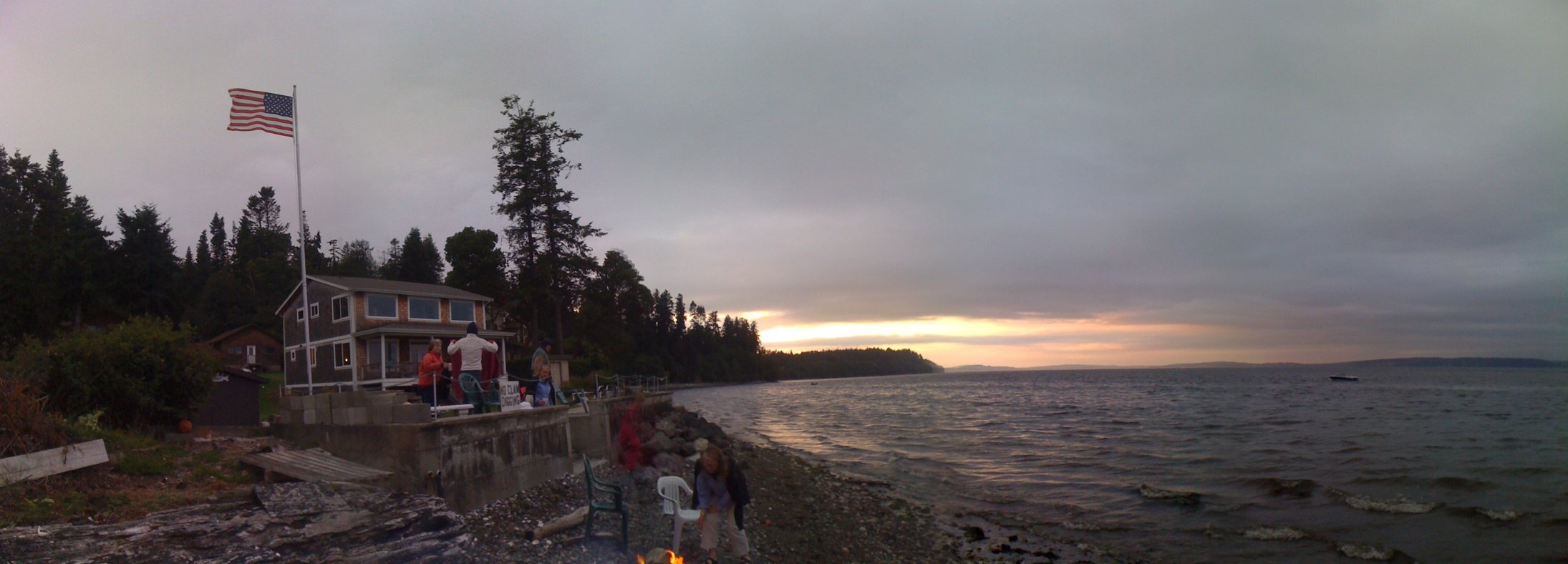
I spent the 4th of July weekend on the shores of Puget Sound (above) and Hood Canal doing a lot nothing (we’ll, there was the kickball game, the balloon toss and the ceremonial blowing stuff up). It was fantastic. But pretty much, I tried to put my mind in neutral.
Hope you found the time to “let your brain lie fallow” during the 4th of July break. If you didn’t, you should try it sometime. It’s pretty amazing.
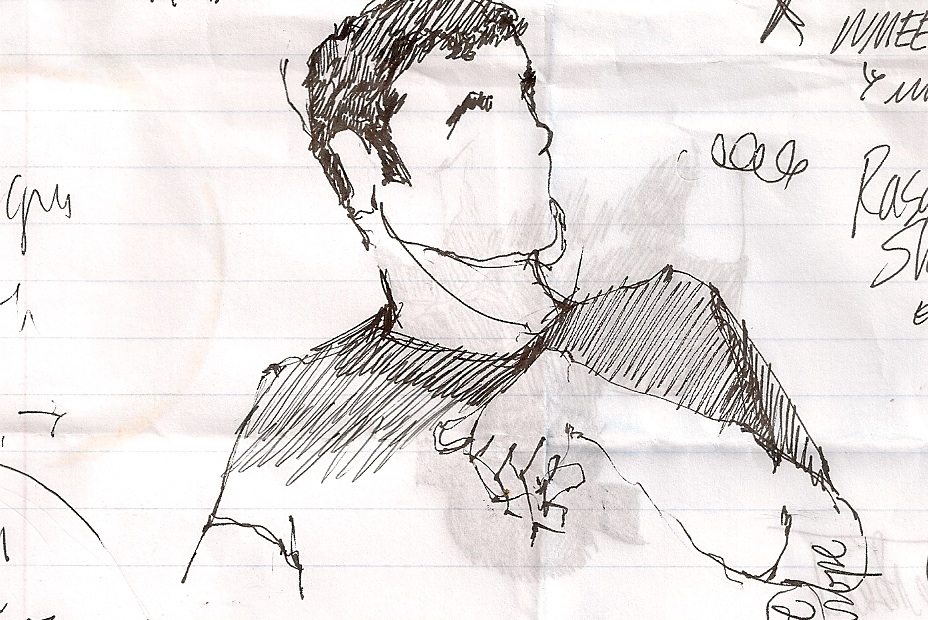
The sketch above is of Bill McConnell in our lawyer’s office in Beverly Hills which is a perfect metaphor since our show, which he inspired, is a show about ancient skills in a modern world A 39-year-old white man, Bill McConnell, is a primitive skills expert. Navy Seals and our U.S. Border patrol come to Montana to train with him. He even works with indigenous tribes like the Apaches, Kootenai and Haidi, helping them re-learn skills their ancestors knew. And he runs camps for kids and adults outside of Bozeman, Montana at the Past Skills Wilderness Camp, the school he founded. (www.pastskills.com)
The first question people ask is, “How does he know all this? What’s his background? How did he learn this?”
And the answer to the question starts with Bill’s best friend, and Grandfather, Willie. Willie was a former underwater demolitions expert in WWII (the precursors to the Seals) who was working for Ford Motor Co. when he got laid off. Willie spent his free time in “God’s country”, the mountains of Pennsylvania, Willie called the time spent in the woods “skinkin”. (I have no idea why.) And Bill loved going out ‘skinkin’ with his Grandfather.
When Willie took Bill with him, they carried nothing in, no food, and no water. Willie taught Bill what was edible, how to find drinking water, how to start a fire, how to catch and cook brook trout. As many natural born hunters do, he soon took up the challenge of bow hunting, which created a need to improve his tracking and awareness skills. As he excelled, his passion led to wanting to make the bows, arrows and tools that indigenous cultures had used. And that process gave him an insight into the cultures that made them.
The life long passion that Willie inspired in Bill created a quest for knowledge, learning, and teaching that has allowed Bill to interact with amazingly diverse groups. He learns by teaching, and teaches to learn.
What Bill would say, is that we all stand of the shoulders of the giants. That by not carrying those lessons forward, we lose not only part of who we are, but also limit our ability to truly excel. The Navy Seals understand this. Trained by the richest nation in the world, equipped with the best technology available, they still seek out the ancient skills from the warrior cultures like the Apaches and the cultures before them that have been around for thousands of years. It’s why they make the trek to Montana, not to learn how to survive nature, but to connect in ways we have forgotten.
Maybe now would be a good time to shut down the computer, take a drive out of the city and go for a hike.
Leave the Ipod behind.


